

Table of Contents
- Quick Answer
- Key Takeaways
- What Is a Periodontist?
- How Is a Periodontist Different From a General Dentist?
- What Does a Periodontist Treat?
- When Should You See a Periodontist?
- Do You Need a Referral to See a Periodontist?
- What Happens at a First Periodontal Visit?
- Frequently Asked Questions
- Does a periodontist do cleanings?
- Do periodontists pull teeth?
- Is a periodontist the same as an oral surgeon?
- Care for What Holds Teeth in Place
- Related Reading
- About the Author
What does a periodontist do that a general dentist doesn’t? The question often comes up after a checkup that mentions gum pockets or ends with a referral. A periodontist is a dentist who specializes in the gums and the jawbone that support the teeth. Periodontics is the branch of dentistry devoted to that foundation, from treating gum disease to placing dental implants.
Quick Answer
A periodontist is a dentist with additional specialty training in the gums and the bone around the teeth. Periodontists diagnose and treat gum disease, repair receding gums, rebuild lost bone and place dental implants. Bleeding or receding gums, loose teeth and deep gum pockets are common reasons people see one.
Key Takeaways
- A periodontist is a dentist with three extra years of specialty training after dental school.
- Periodontists treat gum disease, gum recession and bone loss, and they place dental implants.
- General dentists handle routine care and often refer more complex gum and implant cases.
- Bleeding, receding or swollen gums and loose teeth are common reasons to see a periodontist.
- A first visit covers a gum exam and X-rays, then ends with a written treatment plan.
What Is a Periodontist?
A periodontist is a dental specialist focused on the tissues that hold teeth in place, meaning the gums, the ligaments and the bone. According to the American Academy of Periodontology, periodontists complete three additional years of education beyond dental school. That training covers gum disease, surgery and the placement of dental implants.
Some periodontists also earn board certification as diplomates of the American Board of Periodontology.
How Is a Periodontist Different From a General Dentist?
A general dentist looks after the whole mouth, while a periodontist concentrates on the gums and bone. General dentists handle checkups, cleanings, fillings and crowns, and many treat milder gum disease. When a case becomes more complex, they often refer the patient to a periodontist.
The two usually work as a team. The periodontist treats the gums or places the implant, and the general dentist continues routine care. The American Academy of Periodontology describes periodontists as experts in both hard tissue, such as bone, and soft tissue, such as the gums, a combination that implant surgery depends on.
What Does a Periodontist Treat?
A periodontist treats problems that affect the support around teeth and implants. Many of these treatments aim to save natural teeth that might otherwise be lost.
- Gum disease, treated with deep cleanings, laser treatment or gum surgery that reduces deep pockets
- Gum recession, treated with gum grafting or the Chao Pinhole technique to cover exposed roots
- Bone loss, rebuilt with bone grafting, sinus lifts or bone regeneration
- Missing teeth, replaced with single-tooth implants, implant-supported bridges or All-on-4 implants
- Cosmetic gum concerns, with crown lengthening and gum contouring to change how much gum shows in a smile
When Should You See a Periodontist?
Early gum disease rarely hurts, so the signs below deserve attention even without any pain. A periodontist evaluates these changes and recommends the care that fits them.
- Gums that bleed when you brush or floss
- Red, swollen or tender gums
- Gums that are receding, making teeth look longer
- Bad breath that lingers after brushing
- Teeth that feel loose or have started to shift
- Deep gum pockets noted at a regular checkup
- Plans for a dental implant, especially after bone loss
Do You Need a Referral to See a Periodontist?
Many people arrive with a referral from a general dentist, and others book a visit on their own after noticing a gum problem. Referral rules vary from office to office, and the front desk can confirm what is needed.
A referral can still help when one is available. Recent X-rays and notes from the general dentist give the periodontist a head start on the history of the gums.
What Happens at a First Periodontal Visit?
A first visit starts with a review of medical and dental history, along with photos and X-rays of the teeth. The periodontist then examines the head, neck and mouth, which includes screening for signs of oral cancer. Gentle probing measures the depth of the pockets between the gums and teeth.
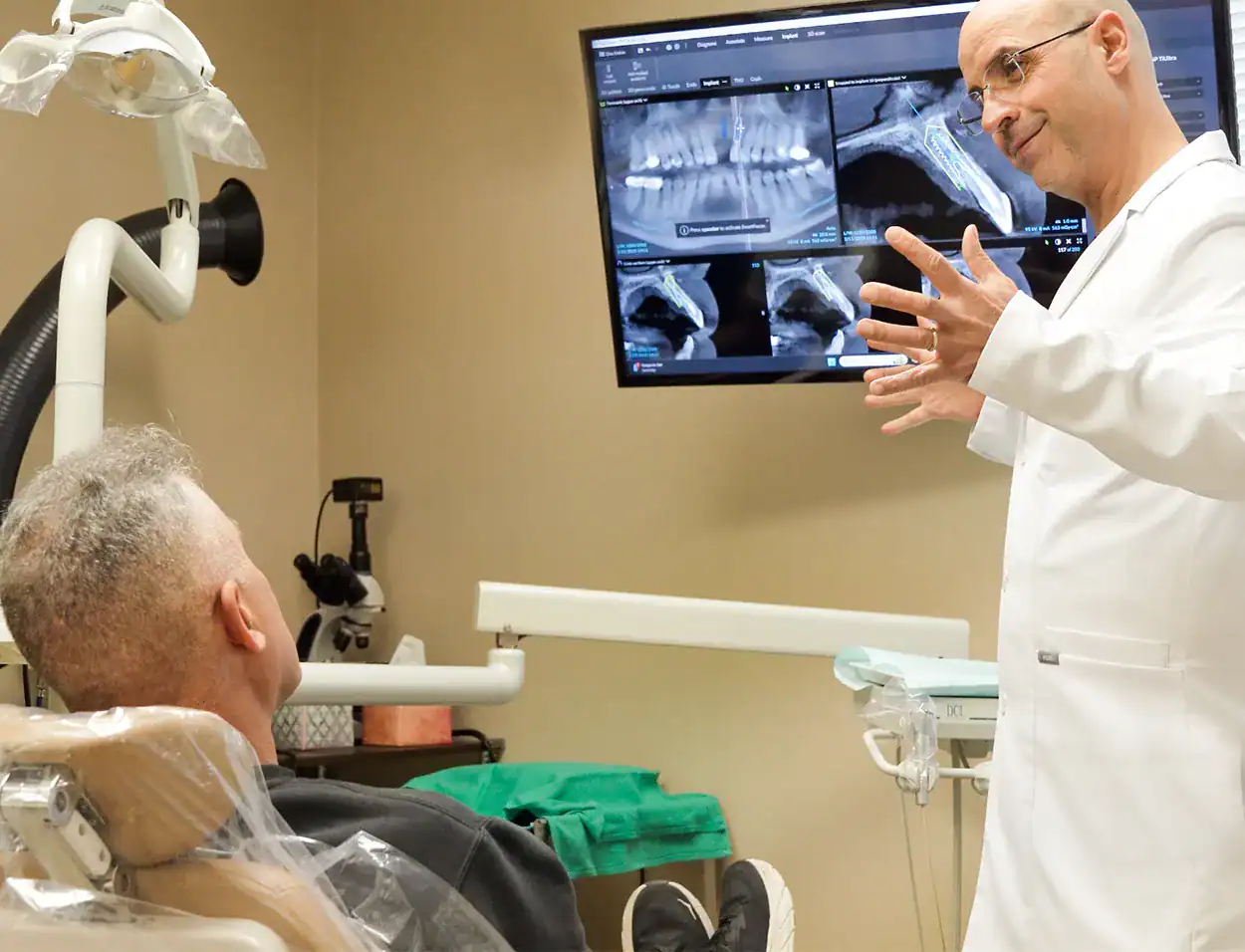
Afterward, the periodontist goes over the findings, using the X-rays and photos to show what is happening. The visit ends with a written treatment plan that explains the recommended care and why it is needed.
Frequently Asked Questions
Does a periodontist do cleanings?
Periodontists perform deep cleanings for gum disease and periodontal maintenance cleanings after treatment. These cleanings reach below the gumline, where routine cleanings on healthy gums don’t need to go.
Do periodontists pull teeth?
Periodontists remove teeth that can’t be saved and can place a graft at the same visit to protect the bone for an implant. Saving the natural tooth is usually the first aim.
Is a periodontist the same as an oral surgeon?
Both are dental specialists who perform surgery, but their focus differs. A periodontist centers on the gums and the bone around the teeth, while an oral and maxillofacial surgeon treats a wider range of conditions in the mouth, jaw and face.
Care for What Holds Teeth in Place
Strong teeth depend on healthy gums and bone underneath them. Periodontics focuses on that support, from the first signs of gum disease to replacing teeth with implants. A periodontist’s training is built around keeping that foundation healthy for the long term.
Related Reading
About the Author
This post was reviewed by Dr. Ajay B. Setya, DDS, MSD, who earned his DDS at Case Western Reserve University College of Dentistry and completed a periodontics residency and Master of Science in Dentistry there. His focus includes gum disease treatment, bone regeneration and dental implants, and he is a member of the American Academy of Periodontology.
- If you want to learn more about periodontal care, visit our Periodontics in Mission Viejo, CA, page or schedule a consultation.