

Table of Contents
- Quick Answer
- Key Takeaways
- How Can You Tell a Gum Abscess From a Canker Sore?
- What Symptoms Come With a Gum Abscess?
- Why Does a Gum Abscess Form?
- Is a Gum Abscess a Dental Emergency?
- Is It Safe to Drain a Gum Abscess at Home?
- How Does a Periodontist Treat a Gum Abscess?
- Frequently Asked Questions
- Can a gum abscess heal on its own?
- Can a gum abscess come back after treatment?
- Can you get an abscess around a dental implant?
- A Bump Worth Taking Seriously
- Related Reading
- About the Author
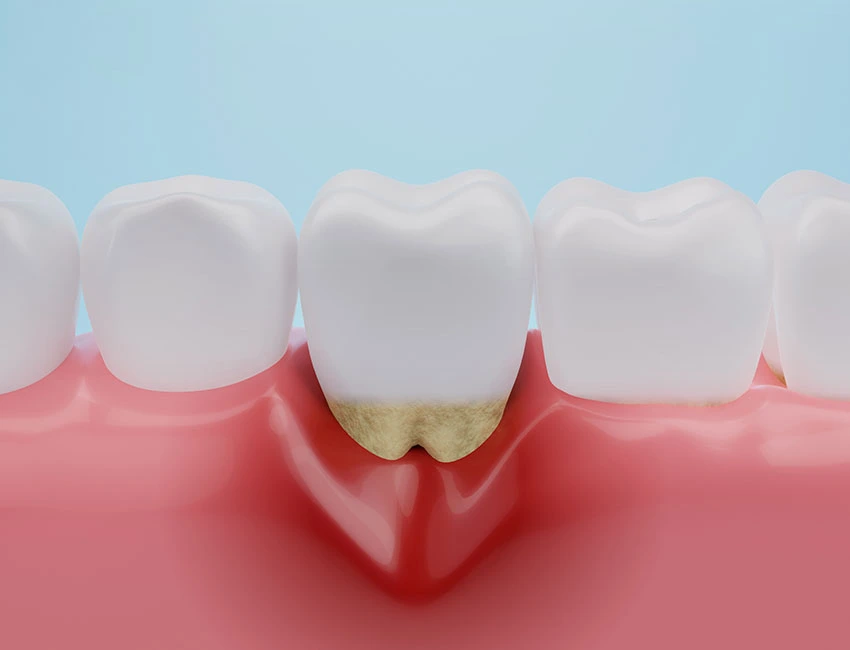
What does a gum abscess look like, and how is it different from an ordinary sore spot? A tender bump on the gum is easy to worry about. A gum abscess, also called a periodontal abscess, is a pocket of pus that forms when bacteria get trapped between a tooth and the gum around it. Gum disease is the usual cause, so gum disease treatment is part of clearing the infection and keeping it from returning.
Quick Answer
A gum abscess usually looks like a swollen bump on the gum beside one tooth, often darker or redder than the gum around it. It can leak pus or leave a bad taste. It counts as a dental emergency, because the infection won’t clear on its own and can spread without treatment.
Key Takeaways
- A gum abscess often looks like a swollen, pimple-like bump on the gum beside one tooth.
- Pain is common, but some people with a gum abscess feel little or no discomfort.
- Gum disease is the most common cause, since deep pockets give bacteria a place to collect.
- Squeezing or draining an abscess at home can push infection deeper and delay proper treatment.
- Facial swelling spreading toward the eye or neck, or fever, needs an emergency room visit.
How Can You Tell a Gum Abscess From a Canker Sore?
A gum abscess is raised and filled with fluid, while a canker sore is a shallow, open ulcer. Canker sores tend to look white or yellow with a red border and often sit on the inner lip, cheek or tongue. An abscess forms in the gum right next to a particular tooth.
An abscess can also leak pus that leaves a salty, unpleasant taste. The tooth beside it may also feel sore when you bite down.
What Symptoms Come With a Gum Abscess?
The bump is the most visible sign, but other symptoms often show up around the same time. According to Cleveland Clinic, many people feel pain or tenderness, while some feel none at all.
Other signs can appear along with the bump.
- Sensitivity to hot or cold food and drinks
- Bad breath or a bad taste that rinsing doesn’t fix
- Pain while chewing on that side
- Swollen lymph nodes in the neck or under the jaw
- A tooth that feels loose
- Fever
Why Does a Gum Abscess Form?
A gum abscess forms when bacteria get into the space between a tooth and the gum and the body walls off the infection. Gum disease is the most common reason. As the gums pull away from the teeth, the pockets deepen, and bacteria and debris collect where a toothbrush can’t reach.
Other triggers include a popcorn hull or seed forced under the gum, a cracked tooth, and a broken filling or crown. Heavy grinding and clenching can raise the risk too. An abscess can also form around a dental implant when the tissue around it becomes infected.
Is a Gum Abscess a Dental Emergency?
A gum abscess is a dental emergency, and it should be seen by a dental professional as soon as possible, ideally the same day. Cleveland Clinic notes that most cases aren’t life-threatening, but the infection can spread, and waiting makes treatment more involved.
Some signs need an emergency room instead of a dental office. Go to the ER right away for facial swelling that spreads toward the eye or down the neck, a fever, or any trouble breathing or swallowing.
Is It Safe to Drain a Gum Abscess at Home?
Draining a gum abscess at home isn’t safe, even when the bump looks ready to burst. Squeezing or poking the bump with a pin can push bacteria deeper and injure the gum. Even if some pus comes out, the source of the infection stays below the gumline.
A few steps can ease discomfort until the appointment. Rinse gently with warm salt water, hold a cold pack against the outside of the cheek, and take an over-the-counter pain reliever exactly as the label directs. Keep aspirin and other pills off the gum itself, because they can burn the tissue.
How Does a Periodontist Treat a Gum Abscess?
Treatment starts by draining the abscess and cleaning the pocket where the infection began. The periodontist measures the pockets around the tooth and takes X-rays to see whether any bone has been affected. Antibiotics are prescribed when the infection calls for them.
The next step is treating the gum disease underneath, so the abscess doesn’t return. That can mean scaling and root planing, laser therapy, or a perioscope to clean deep pockets with a tiny camera. When a tooth is too damaged to keep, the periodontist explains the replacement options before it is removed.
Frequently Asked Questions
Can a gum abscess heal on its own?
A gum abscess won’t heal on its own, even if it drains and the pain fades for a while. The bacteria remain in the pocket, so the swelling tends to return until the area is treated.
Can a gum abscess come back after treatment?
An abscess can return if the gum disease behind it stays active. Treating the deep pockets and keeping up with periodontal maintenance visits lowers that risk.
Can you get an abscess around a dental implant?
An implant can develop an abscess when the gum and bone around it become infected. It looks much like an abscess beside a natural tooth and needs the same prompt care.
A Bump Worth Taking Seriously
A gum abscess is small, yet it signals an infection that needs professional care to clear. Drainage brings relief, and gum disease treatment deals with the deep pockets that let the infection start.
Related Reading
- Why Do My Gums Hurt All of a Sudden? Common Causes Explained
- Top 5 Reasons Your Gums Are Pulling Away From Your Teeth
About the Author
This post was reviewed by Dr. Christen S. Bergman, DDS, MS, who earned her DDS at Creighton University School of Dentistry and completed an MS in Periodontics and Implant Surgery at Loma Linda University. She specializes in soft tissue cosmetic surgery and laser periodontal therapy.
- If you want to learn more about treating a gum abscess, visit our Gum Disease Treatment in Mission Viejo, CA, page or schedule a consultation.